RECONSTITUTION
Reconstitution is not inherently required. Many injectable B-Complex products are manufactured as sterile aqueous solutions.

B-Complex is not a single chemical compound. It is a formulation containing multiple water-soluble B vitamins, with composition, concentration, excipients and intended route varying between products. This research reference explains B-Complex composition, reconstitution, diluent considerations, concentration mathematics, stability, storage, sterility, endotoxin and clinical research.

Does B-Complex commonly require reconstitution? Not necessarily. Many B-Complex products are supplied ready to use as tablets, capsules, oral liquids or sterile injectable solutions.
Is B-Complex one standardized formulation? No. B-Complex describes a group of B vitamins rather than one standardized chemical substance.
Is bacteriostatic water a universal B-Complex diluent? No. BAC water should not be assumed to be compatible with every B-Complex formulation.
What determines concentration? The quantity of each individual vitamin and the final solution volume. Each vitamin therefore has its own concentration.
Because B-Complex is a mixture rather than a single chemical entity, formulation and research questions should be evaluated at the individual-vitamin and product level.
Reconstitution is not inherently required. Many injectable B-Complex products are manufactured as sterile aqueous solutions.
There is no universal BAC-water recommendation. Diluent compatibility must be verified against the exact formulation.
Each vitamin has its own concentration. B-Complex should not be treated as one chemical concentration.
Identity, assay, material grade, sterility and endotoxin controls should be evaluated according to intended use.
Evidence differs substantially among individual B vitamins and clinical indications.
Regulatory classification depends on the exact product, formulation, route and jurisdiction.
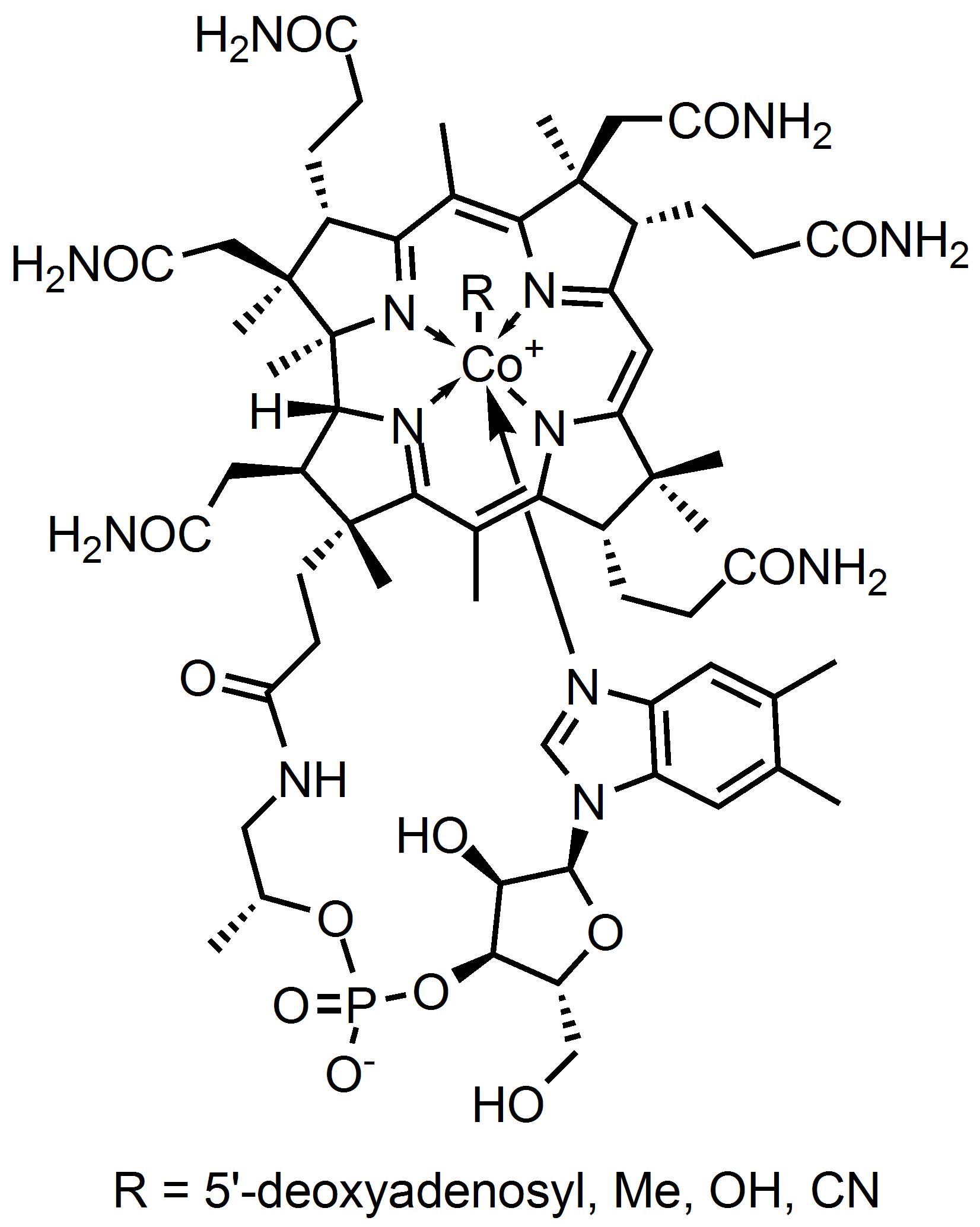
B-Complex refers to preparations containing multiple B vitamins. Common members include thiamine (B1), riboflavin (B2), niacin or niacinamide (B3), pantothenic acid (B5), pyridoxine or related B6 forms, biotin (B7), folate (B9) and cobalamin (B12).
These vitamins are chemically distinct molecules with different biological functions. A B-Complex formulation can therefore vary significantly from one product to another.
This is why the term "B-Complex concentration" requires additional information. The concentration of thiamine may be completely different from the concentration of pyridoxine or niacinamide in the same product.
| Vitamin | Common Name | Biological Role | Formulation Consideration |
|---|---|---|---|
| B1 | Thiamine | Energy metabolism and cellular function | May be supplied as thiamine hydrochloride or another form. |
| B2 | Riboflavin | Redox reactions and energy metabolism | Different riboflavin forms can be used. |
| B3 | Niacin / Niacinamide | NAD/NADP-related metabolism | Niacin and niacinamide are distinct compounds. |
| B5 | Pantothenic Acid | Coenzyme A-related metabolism | Different salts or derivatives may be used. |
| B6 | Pyridoxine / related forms | Amino-acid and neurotransmitter metabolism | Exact chemical form should be identified. |
| B7 | Biotin | Carboxylase cofactor | Not present in every injectable B-Complex formulation. |
| B9 | Folate / Folic Acid | One-carbon metabolism and nucleotide synthesis | Different folate forms have different properties. |
| B12 | Cobalamin | Neurological and hematological functions | Cyanocobalamin, hydroxocobalamin and methylcobalamin are distinct forms. |
B vitamins participate in numerous enzymatic pathways involving energy metabolism, amino-acid metabolism, nucleotide synthesis, methyl-group transfer, redox reactions and neurological function.
Their functions are not interchangeable. Thiamine, riboflavin, niacin, pyridoxine, folate and cobalamin participate in different biochemical pathways.
Evidence for one B vitamin should therefore not automatically be presented as evidence for every B-Complex formulation.
B-vitamin preparations are used in research and clinical settings involving specific nutritional deficiencies and increased requirements.
Several B vitamins function as cofactors in pathways involved in carbohydrate, lipid and amino-acid metabolism.
B1, B6, B9 and B12 are investigated in relation to neurological function and deficiency-associated neurological effects.
Folate and vitamin B12 are important for DNA synthesis and normal blood-cell production.
Clinical evidence should be interpreted according to the individual vitamin, population, dose, route and indication rather than assuming that every B-Complex formulation produces the same clinical effect.
Evidence that a particular B vitamin is beneficial in a deficiency state does not automatically demonstrate that high-dose B-Complex supplementation provides additional benefits in individuals who are already nutritionally adequate.
Unlike a single lyophilized compound with a defined molecular identity, B-Complex may contain several active ingredients in different ratios.
Some injectable B-Complex products are already manufactured as sterile aqueous solutions.
Therefore, adding BAC water to an existing B-Complex injectable should not be presented as a universal preparation method.
Researchers should verify the exact product label, formulation, concentration, intended route and manufacturer instructions.
| Question | Research Position |
|---|---|
| Is BAC water a universal B-Complex diluent? | No |
| Are some B-Complex injections already aqueous? | Yes |
| Can dilution be formulation-specific? | Yes |
| Can Normal Saline be specified by product labeling? | Product dependent |
| Does mathematical compatibility prove stability? | No |
| Should exact manufacturer documentation control? | Yes |
Concentration is mathematically straightforward, but B-Complex requires one important distinction: each active vitamin has its own concentration.
For mathematical illustration only, if a formulation contains 100 mg of thiamine in a final volume of 1 mL, the thiamine concentration is 100 mg/mL.
The same formulation could contain a completely different concentration of riboflavin, pyridoxine or niacinamide.
Open Universal BAC Water CalculatorThe BacScience Universal BAC Water Calculator performs mathematical concentration and volume conversions. It does not determine whether BAC water is compatible with a particular B-Complex formulation and does not establish sterility, endotoxin safety, chemical stability, route suitability or clinical appropriateness.
Vial size alone does not establish the concentration of the individual vitamins contained in a B-Complex product.
| Information | What It Tells You |
|---|---|
| Total vial volume | Total liquid volume contained in the labeled product. |
| Amount per mL | Concentration of each listed vitamin. |
| Total amount in vial | Total quantity of a specific vitamin in the labeled volume. |
| Final diluted volume | Determines mathematical concentration after documented dilution. |
B-Complex stability cannot be reduced to one universal storage condition. Individual vitamins have different chemical characteristics, while commercial formulations can contain different excipients, preservatives, containers and pH conditions.
Sterility and endotoxin are separate quality attributes. A chemically pure vitamin material does not automatically qualify as a sterile injectable preparation.
Injectable preparations require appropriate sterile manufacturing or compounding controls. Dissolving vitamin material in sterile liquid does not independently establish a sterile injectable product.
Endotoxin is a separate quality concern from chemical purity. Appropriate route-specific controls and testing are important for sterile preparations.
Confirm every active ingredient and its specific chemical form.
Review quantitative assay information for individual vitamins.
Determine whether ingredients are intended for dietary, research or pharmaceutical use.
Injectable preparations require appropriate microbial controls.
Evaluate endotoxin control separately from chemical purity.
Maintain manufacturer, lot number, expiration and analytical documentation.
There is no single regulatory status for every B-Complex preparation. Classification depends on the exact formulation, intended use, route and jurisdiction.
Some B-Complex injectable products found in drug-labeling databases are specifically labeled for veterinary use. Such products should not be represented as human pharmaceutical products.
B-Complex is a formulation containing multiple B vitamins. It is not one single chemical compound and its exact composition varies by product.
Not necessarily. Many B-Complex products are already supplied as tablets, capsules, oral liquids or sterile injectable solutions.
BAC water should not be assumed to be a universal B-Complex diluent. The exact formulation and manufacturer's documentation should determine whether dilution is appropriate.
B-Complex contains multiple chemically distinct vitamins, each of which can be present at a different concentration.
The concentration of an individual vitamin is calculated by dividing its amount by the final solution volume.
The calculator can perform mathematical concentration and volume conversions where applicable. It does not establish diluent compatibility, sterility, endotoxin safety or stability.
No. Injectable formulations can contain different vitamins, concentrations, preservatives, excipients and storage requirements.
No. Storage requirements are formulation-specific.
No. Chemical purity, sterility and endotoxin control are separate quality attributes.
Use the BacScience Universal BAC Water Calculator for mathematical concentration and volume calculations. Always verify the exact formulation and product-specific dilution instructions independently.
Open BAC Water CalculatorSeptember 11, 2026
This page should be periodically reviewed as product labeling, formulation data, regulatory information and clinical evidence change.