Reconstitution
Reconstitution is not inherently required for methylcobalamin. Many injectable products are supplied as finished solutions.

Methylcobalamin, also called mecobalamin or MeB12, is a biologically active form of vitamin B12 involved in vitamin B12-dependent metabolism, particularly methionine synthase activity. This reference examines methylcobalamin formulations, reconstitution and diluent considerations, concentration calculations, stability, quality, sterility, clinical research and regulatory considerations.

Does methylcobalamin commonly require reconstitution? No. Methylcobalamin is commonly encountered in finished oral or injectable formulations. A marketed methylcobalamin injection listed in DailyMed, for example, is a 1 mg/mL intramuscular solution rather than a dry powder requiring user reconstitution.
Is bacteriostatic water an established universal diluent? No. BacScience found no authoritative basis for treating BAC water as a universal diluent for methylcobalamin.
Are reconstitution instructions formulation-specific? Yes. If a particular methylcobalamin product is supplied as a powder or concentrate, its manufacturer, validated formulation documentation, pharmacy formulation record or applicable product labeling should establish the appropriate preparation method.
What determines concentration? The mathematical concentration depends on the amount of methylcobalamin and the final solution volume. It does not determine chemical compatibility, sterility, stability or clinical suitability.
Six core considerations help distinguish a mathematical concentration question from a genuine pharmaceutical formulation question.
Reconstitution is not inherently required for methylcobalamin. Many injectable products are supplied as finished solutions.
BAC water should not be assumed to be a validated methylcobalamin diluent. The exact formulation documentation controls.
Concentration is a mass-to-volume calculation. A calculated value is not automatically a validated injectable concentration.
Identity, assay, impurities, material grade, container closure and traceability should be evaluated independently.
Human research includes oral and intramuscular methylcobalamin as well as experimental high-dose intravenous research.
Regulatory status varies by country, product, dosage form and route. A listing should never be interpreted as universal approval.
Methylcobalamin is one of the naturally occurring forms of vitamin B12. It is also called mecobalamin, MeCbl or methyl-B12.
Unlike cyanocobalamin, methylcobalamin contains a methyl group coordinated to the central cobalt atom. It is one of the two coenzyme forms of vitamin B12 used by human B12-dependent enzymes. :contentReference[oaicite:3]{index=3}
PubChem identifies methylcobalamin with CAS number 13422-55-4 and the molecular formula C₆₃H₉₁CoN₁₃O₁₄P, with a molecular weight of approximately 1,344.4 g/mol. :contentReference[oaicite:4]{index=4}
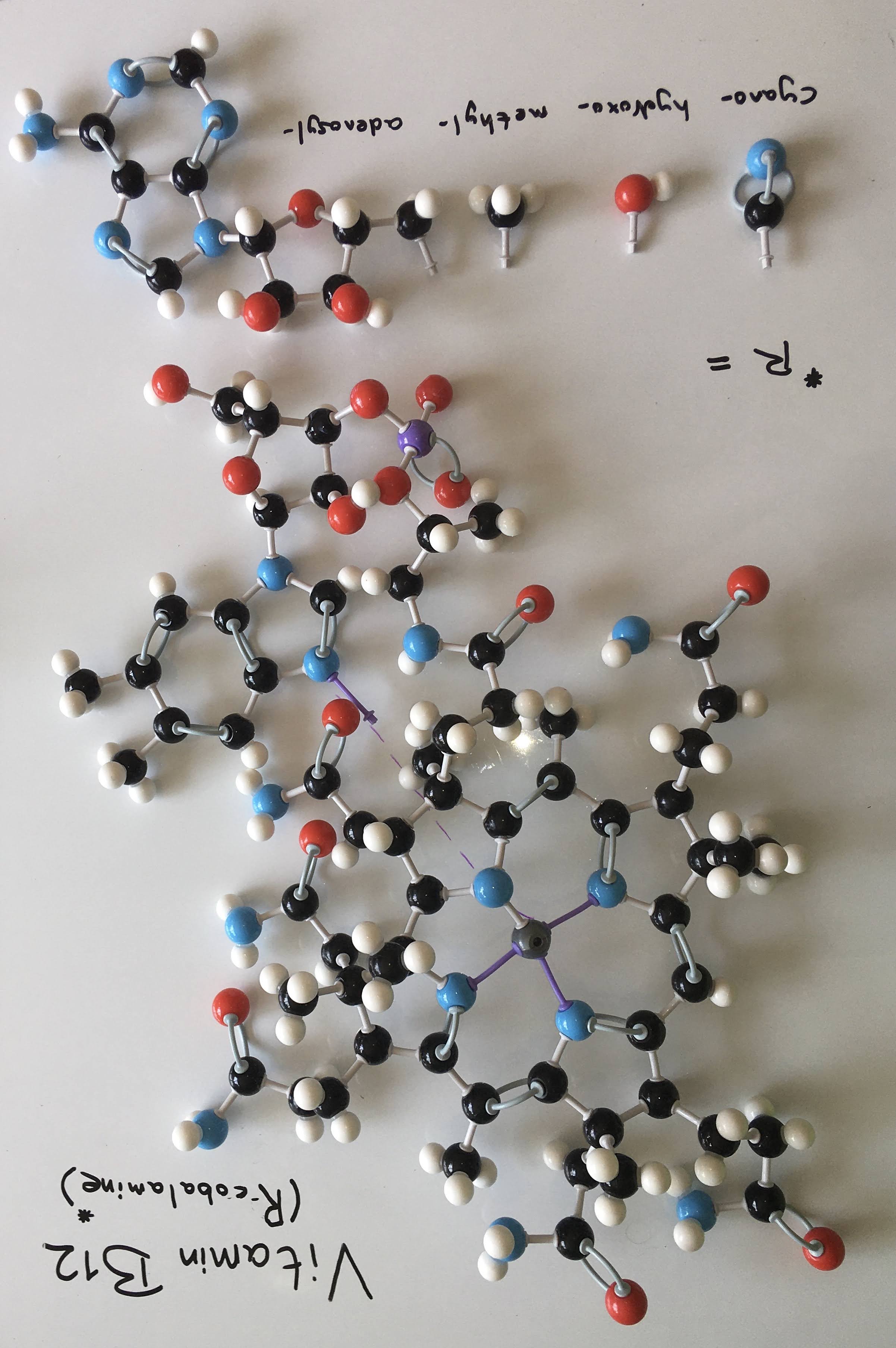
Methylcobalamin functions as a coenzyme for methionine synthase, an enzyme involved in the conversion of homocysteine to methionine. Through this pathway, vitamin B12 participates in one-carbon metabolism and the regeneration of methionine from homocysteine.
Vitamin B12 is also essential for normal neurological function and hematopoiesis. Deficiency can affect blood-cell formation and the nervous system.
The biological importance of vitamin B12 does not mean that additional methylcobalamin necessarily produces benefits beyond correcting deficiency.
| Form | Key characteristic | Research / use context |
|---|---|---|
| Methylcobalamin | Methyl-coordinated cobalamin | Oral supplements and injectable products; neurological research |
| Cyanocobalamin | Cobalamin containing a cyano ligand | Widely used vitamin B12 form in supplements and pharmaceutical products |
| Hydroxocobalamin | Hydroxo ligand at cobalt | Injectable vitamin B12 formulation in several jurisdictions |
| Adenosylcobalamin | Adenosyl-coenzyme form | Important B12 coenzyme involved in methylmalonyl-CoA mutase |
NIH notes that dietary supplements may contain cyanocobalamin, methylcobalamin, adenosylcobalamin or hydroxocobalamin and that research has not established one supplemental form as universally superior to the others. :contentReference[oaicite:5]{index=5}
Vitamin B12 supplementation is established for correcting vitamin B12 deficiency. The appropriate form and route depend on the underlying cause, severity and clinical circumstances.
Methylcobalamin has been investigated for peripheral neuropathy, diabetic neuropathy and other nerve-related conditions.
Experimental and clinical research has examined high-dose methylcobalamin in relation to axonal regeneration and peripheral nerve function.
High-dose methylcobalamin has also been studied experimentally in conditions such as amyotrophic lateral sclerosis and chronic peripheral neuropathy.
Human research on methylcobalamin includes oral, intramuscular and intravenous administration. The evidence is highly route- and indication-specific.
| Route | Research context | Evidence interpretation |
|---|---|---|
| Oral | Vitamin B12 deficiency and diabetic neuropathy | Human randomized trials have evaluated oral methylcobalamin. |
| Intramuscular | Peripheral and diabetic neuropathy | Clinical trials have evaluated IM methylcobalamin against oral regimens and other treatments. |
| Intravenous | Experimental high-dose neurological research | Research exists, but these protocols should not be generalized to ordinary vitamin B12 replacement. |
The following values are examples of doses reported in clinical studies. They are presented as research data rather than dosing recommendations.
| Study | Route | Research regimen | Population |
|---|---|---|---|
| Peripheral neuropathy study | IM | 500 µg three times weekly vs 1,500 µg once weekly | Patients with peripheral neuropathy |
| Diabetic peripheral neuropathy RCT | IM | 0.5 mg/day, three times weekly for 8 weeks | Mild-to-moderate diabetic peripheral neuropathy |
| Peripheral neuropathy phase I/II research | IV | 25 mg/day for 10 days followed by monthly 25 mg | Chronic peripheral neuropathy |
| Diabetic neuropathy oral research | Oral | 1,000–2,000 µg/day | Type 2 diabetes with low B12 and neuropathy |
Ultra-high-dose IV methylcobalamin studies are experimental protocols. They should not be interpreted as standard vitamin B12 replacement regimens or as instructions for preparing injectable research material.
A phase I/II study evaluated IV methylcobalamin at 25 mg/day for 10 days followed by monthly 25 mg doses in patients with chronic peripheral neuropathy. Fourteen patients were enrolled, with 12 completing the primary outcome evaluation. :contentReference[oaicite:6]{index=6}
Another clinical study compared IM methylcobalamin at 500 µg three times weekly with 1,500 µg once weekly in patients with peripheral neuropathy. :contentReference[oaicite:7]{index=7}
A randomized clinical trial comparing IM methylcobalamin with oral tablets in diabetic peripheral neuropathy evaluated 0.5 mg/day by injection three times weekly for eight weeks in the injection group. :contentReference[oaicite:8]{index=8}
A 2026 randomized clinical trial evaluated oral methylcobalamin at 1,000 or 2,000 µg/day for 16 weeks in adults with type 2 diabetes, diabetic peripheral neuropathy and low serum B12. Both groups showed improvements in neuropathic symptoms, with no significant difference between the two dose groups for the primary neuropathic outcomes. :contentReference[oaicite:9]{index=9}
Many commercial methylcobalamin preparations are already formulated as oral products or sterile injectable solutions.
For example, a DailyMed-listed methylcobalamin injection contains 1 mg/mL and is labeled for intramuscular administration. Importantly, that particular listing is classified as an unapproved drug and its labeling explicitly states that FDA has not found it safe and effective. :contentReference[oaicite:10]{index=10}
Therefore, a generic internet instruction such as "add X mL of BAC water to a methylcobalamin vial" is not scientifically justified unless the specific formulation documentation establishes that procedure.
| Question | BacScience Position |
|---|---|
| Is BAC water a universal methylcobalamin diluent? | Not established |
| Does every methylcobalamin product require a diluent? | No |
| Are injectable products available as finished solutions? | Yes |
| Should the exact product documentation determine preparation? | Yes |
| Does mathematical solubility establish injectable suitability? | No |
Methylcobalamin's ability to dissolve in water does not establish that any particular bacteriostatic or sterile diluent is appropriate for a specific sterile formulation.
Concentration is a mathematical relationship between the amount of methylcobalamin and the final solution volume.
Example for mathematical reference only: 1 mg of methylcobalamin in a final volume of 1 mL corresponds mathematically to 1 mg/mL.
Likewise, 1 mg in a final volume of 2 mL corresponds mathematically to 0.5 mg/mL.
These calculations do not establish that the concentration is chemically stable, sterile, clinically appropriate or suitable for injection.
Open Universal BAC Water CalculatorThe BacScience calculator performs mathematical concentration and volume conversions.
It does not determine:
For a finished methylcobalamin solution, the labeled concentration and container volume determine the total quantity of active ingredient.
| Labeled concentration | Container volume | Mathematical total quantity |
|---|---|---|
| 1 mg/mL | 1 mL | 1 mg |
| 1 mg/mL | 2 mL | 2 mg |
| 0.5 mg/mL | 2 mL | 1 mg |
These are mathematical examples only. Actual product concentration and container volume must always be taken from the product label or certificate/documentation rather than inferred from an internet example.
Cobalamins are chemically complex molecules and their stability can be influenced by light, temperature, formulation composition, pH and container conditions.
Vitamin B12 compounds are known to be sensitive to light. Product labeling should therefore be followed for light-protection and storage requirements.
Stability information from one methylcobalamin formulation should not automatically be transferred to another product, concentration, container or diluent.
Storage requirements for a dry analytical or research material can differ substantially from those of a finished injectable solution.
If a specific formulation requires reconstitution, post-reconstitution stability should be supported by appropriate formulation or stability data.
Sterility is not a property that can be inferred from chemical identity or purity alone. A methylcobalamin material intended for sterile use requires appropriate manufacturing, handling and testing controls.
A certificate showing high methylcobalamin assay does not by itself establish sterility, endotoxin compliance, particulate control or suitability for injection.
Verify that the material is methylcobalamin rather than another cobalamin form.
Review the reported assay and analytical method rather than relying solely on a numerical purity percentage.
Distinguish analytical/research material from pharmaceutical-grade ingredients intended for sterile manufacturing.
Maintain lot numbers, supplier identity, analytical documentation and certificate-of-analysis records.
Endotoxin requirements are particularly relevant to any material intended for parenteral research.
Stability data should correspond to the actual chemical form, formulation, concentration, container and storage condition.
Methylcobalamin has different regulatory positions depending on jurisdiction, formulation and route.
Japan's PMDA maintains official information for Mecobalamin injection products, including Mechicobal 500 µg injection manufactured by Eisai. This demonstrates that methylcobalamin is used in regulated injectable medicinal products in some jurisdictions. :contentReference[oaicite:11]{index=11}
In the United States, however, a DailyMed listing for a methylcobalamin injection explicitly identifies the product as an unapproved drug and states that FDA has not found it safe and effective. Therefore, a DailyMed listing should not be confused with FDA approval. :contentReference[oaicite:12]{index=12}
Always distinguish the chemical compound itself from the regulatory status of a particular product.
Vitamin B12 is generally considered to have a broad safety margin when used appropriately, but route, formulation, dose and patient characteristics remain important.
| Research area | Evidence signal | Important limitation |
|---|---|---|
| B12 deficiency | Established | Appropriate form and route depend on clinical circumstances. |
| Peripheral neuropathy | Investigated | Studies differ substantially in design, route and population. |
| Diabetic neuropathy | Clinical evidence | Results should not be generalized to every neuropathy. |
| High-dose IV neuroregeneration | Experimental | Small or indication-specific studies; not standard B12 replacement. |
Methylcobalamin is a naturally occurring form of vitamin B12 and one of the two coenzyme forms of B12 used in human B12-dependent metabolism.
Methylcobalamin is a form, or vitamer, of vitamin B12. Vitamin B12 also exists as cyanocobalamin, hydroxocobalamin and adenosylcobalamin.
Not necessarily. Many methylcobalamin products are supplied as finished oral or injectable formulations. Reconstitution is only relevant when the specific product is supplied in a form requiring preparation.
BAC water should not be assumed to be a universal methylcobalamin diluent. The appropriate diluent must be established from the exact product or validated formulation documentation.
Concentration in mg/mL equals the amount of methylcobalamin in mg divided by the final solution volume in mL.
The molecular weight of methylcobalamin is approximately 1,344.4 g/mol.
Human research includes oral, intramuscular and intravenous administration. Evidence differs substantially between routes.
Yes. Small clinical studies have investigated high-dose IV methylcobalamin for neurological conditions including peripheral neuropathy. These experimental protocols should not be interpreted as ordinary vitamin B12 replacement regimens.
NIH notes that research has not established one supplemental B12 form as universally superior to the others.
No. The calculator performs mathematical concentration and volume conversions. It does not establish chemical compatibility, sterility, endotoxin safety, stability or clinical suitability.
Research-grade material should not automatically be considered suitable for sterile injection. Injectable use requires appropriate pharmaceutical-quality controls, formulation, sterility and endotoxin controls.
Different cobalamin forms have different chemical structures and may have different formulation characteristics. Research findings should therefore be attributed to the actual B12 form studied.
Use the BacScience Universal BAC Water Calculator for mathematical concentration and volume conversions. Always verify the actual formulation, diluent and storage requirements from authoritative product documentation.
Open BAC Water CalculatorThe molecular images used on this page are loaded directly from Wikimedia Commons and are not stored in the BacScience Shopify Files area.
If BacScience later wants full control over image availability, performance and licensing, the images can instead be downloaded and uploaded to Shopify Files.
September 11, 2026
Research and regulatory information should be periodically reviewed as new clinical studies, product labels and regulatory documents become available.