Reconstitution
Taurine does not inherently require reconstitution. Powder-to-solution preparation is formulation-specific and should follow the documentation associated with the exact material.

Taurine is a naturally occurring sulfur-containing amino sulfonic acid involved in osmoregulation, bile-acid conjugation, membrane function, calcium handling and cellular stress responses. This reference examines taurine chemistry, clinical research, concentration calculations, formulation-specific reconstitution, diluent considerations, stability, storage, sterility, endotoxin and material-quality considerations.
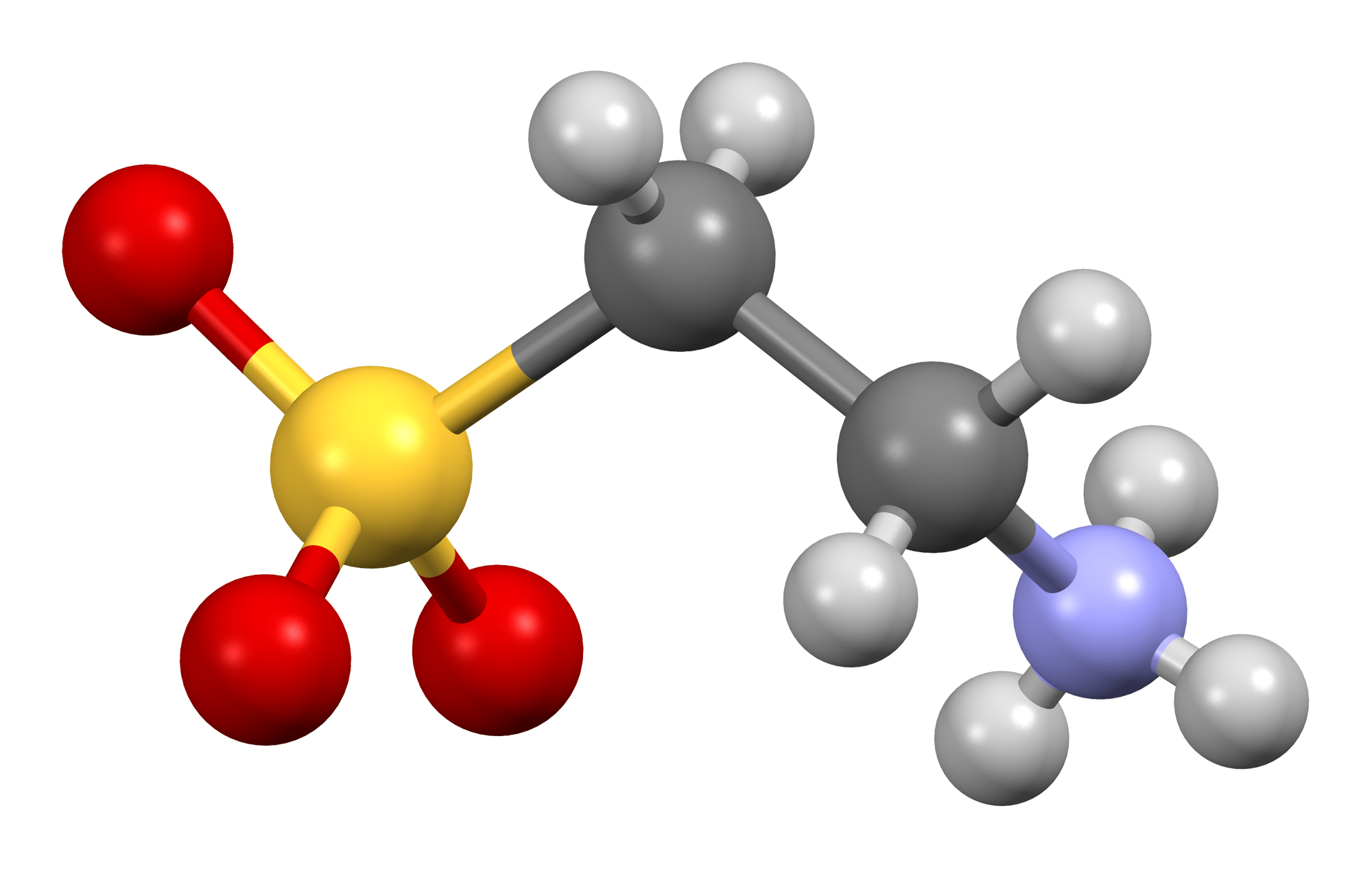
Does taurine commonly require reconstitution? Taurine itself is a water-soluble crystalline compound and is commonly encountered in already-prepared oral formulations. Reconstitution is therefore not an inherent requirement of taurine as a molecule.
Is bacteriostatic water an established universal taurine diluent? No. There is no basis for treating bacteriostatic water as a universal diluent for every taurine powder or formulation.
Are taurine injectable formulations documented? Taurine is included as a component of certain parenteral amino-acid formulations. FDA/DailyMed labeling for TrophAmine, for example, identifies taurine as one component of an amino-acid injection whose vehicle includes Water for Injection. This does not establish a standalone taurine powder reconstitution procedure.
What determines concentration? For a simple solution, concentration is mathematically determined by the amount of taurine divided by the final solution volume.
What determines whether that concentration is usable? Chemical compatibility, pH, osmolality, sterility, endotoxin limits, material grade, container closure, stability and the intended route must be established separately.
Taurine differs substantially from many peptide research compounds. Concentration mathematics are straightforward, but a mathematical concentration should never be confused with a validated pharmaceutical formulation.
Taurine does not inherently require reconstitution. Powder-to-solution preparation is formulation-specific and should follow the documentation associated with the exact material.
Bacteriostatic water should not be assumed to be an established universal taurine diluent. Published pharmaceutical formulations may use different vehicles.
Mathematical concentration is calculated from total taurine mass and final volume. This does not validate the resulting formulation.
Taurine identity, assay, impurities, material grade and batch traceability should be established before research use.
Human research includes cardiometabolic, exercise, metabolic and neurological investigations, with results varying by indication.
Regulatory status depends on jurisdiction, formulation, route and intended use. Food or supplement status should not be equated with injectable pharmaceutical status.
Taurine is a naturally occurring amino sulfonic acid also known as 2-aminoethanesulfonic acid. Unlike the standard proteinogenic amino acids, taurine is not incorporated into proteins during normal ribosomal protein synthesis.
Taurine is widely distributed in mammalian tissues and participates in multiple biological processes, including osmoregulation, bile-acid conjugation, membrane stabilization, calcium-related signaling and cellular stress responses.
PubChem identifies taurine as C₂H₇NO₃S with a molecular weight of approximately 125.15 g/mol. The compound's CAS Registry Number is 107-35-7.

| Property | Taurine |
|---|---|
| Preferred chemical name | 2-Aminoethanesulfonic acid |
| Molecular formula | C₂H₇NO₃S |
| Molecular weight | 125.15 g/mol |
| CAS Registry Number | 107-35-7 |
| PubChem CID | 1123 |
| Physical description | White or colorless crystalline material |
| Water solubility | Soluble in water |
Taurine has several recognized physiological roles. Research literature describes involvement in osmotic regulation, bile-acid conjugation, membrane stability, calcium handling and cellular stress responses.
Taurine contributes to regulation of intracellular osmotic balance and is present at relatively high concentrations in several tissues.
Taurine is used in bile-acid conjugation, helping form taurine conjugates that participate in lipid digestion and absorption.
Research has investigated taurine in relation to oxidative stress, membrane stability, mitochondrial function and cellular signaling.
Taurine is present in the central nervous system and has been studied in relation to neuroprotection, neurotransmission and cognitive function.
Human randomized trials have investigated taurine supplementation for blood pressure, glucose regulation, lipid profiles and metabolic markers.
Clinical studies have examined taurine in people with diabetes and metabolic dysfunction, including glycemic and insulin-resistance outcomes.
Taurine has been investigated in heart failure and cardiomyopathy, although clinical evidence remains insufficient to establish a general treatment indication.
Randomized trials have studied acute taurine ingestion and exercise performance. Effects vary between performance domains and studies.
Human trials have investigated cognitive outcomes, but recent systematic review evidence does not establish a consistent cognitive benefit.
Taurine has attracted substantial aging research interest, although many mechanistic and longevity findings remain preclinical or investigational.
Human taurine research is broader than many amino-acid research compounds, but the evidence should be interpreted by indication, formulation, dose, duration and route.
| Research Area | Human Evidence | Current Interpretation |
|---|---|---|
| Cardiometabolic | Multiple RCTs and meta-analyses | Promising biomarker effects, but not equivalent to proof of disease prevention or treatment. |
| Diabetes | Several RCTs | Some glycemic and metabolic improvements have been reported. |
| Heart failure | Small and heterogeneous studies | Insufficient evidence for broad therapeutic conclusions. |
| Exercise | Multiple randomized trials | Small-to-moderate acute performance effects have been reported, with uncertainty between outcomes. |
| Cognition | Several RCTs | Current meta-analysis does not establish a consistent cognitive benefit. |
The values below summarize doses reported in clinical research. They are not recommendations or instructions for self-administration.
| Research Area | Reported Range | Evidence Context |
|---|---|---|
| Cardiometabolic studies | Approximately 0.5–6 g/day | Doses and study durations varied considerably between trials. |
| Diabetes research | Variable oral supplementation protocols | Meta-analysis included five RCTs involving 209 participants. |
| Heart failure research | Approximately 500 mg–6 g/day | Eleven human studies were included in a systematic review. |
| Exercise research | Common acute range approximately 1–6 g | Recent meta-analysis found small-to-moderate overall performance effects but substantial uncertainty. |
A 2022 systematic review of taurine in heart failure found studies using 500 mg to 6 g/day, with substantial variation in delivery method, frequency and duration. The authors concluded that a formal clinical trial was still needed.
A 2024 meta-analysis of 25 randomized trials involving 1,024 participants reported taurine doses from 0.5 to 6 g/day and found statistically significant changes in several metabolic and blood-pressure measures, while emphasizing the need for further research.
| Route | Research Status | Interpretation |
|---|---|---|
| Oral | Most extensively studied | Primary route represented in modern supplementation trials and meta-analyses. |
| Enteral / beverage | Studied | Taurine has been investigated in beverage and nutritional formulations. |
| Intravenous / parenteral | Formulation-dependent | Taurine appears as a component of certain parenteral nutrition formulations, but this does not establish a universal standalone injectable taurine preparation. |
This distinction is important because taurine is commonly supplied as a water-soluble crystalline material and is also used as an ingredient in more complex pharmaceutical formulations.
A specific powder-to-solution preparation should therefore be based on the exact material's documentation rather than on the chemical identity of taurine alone.
If a formulation is intended for sterile administration, the preparation must additionally address sterility, bacterial endotoxins, particulate matter, appropriate ingredient quality, container closure, pH, osmolality and validated stability.
Diluent selection should be treated as a formulation question rather than a simple solubility question.
| Question | BacScience Position |
|---|---|
| Is taurine water-soluble? | Yes |
| Is BAC water universally established for taurine? | No |
| Is Water for Injection used in taurine-containing pharmaceutical formulations? | Yes |
| Does this establish a standalone taurine + WFI recipe? | No |
| Does a suitable diluent prove sterility or stability? | No |
The presence of taurine in a commercial parenteral nutrition product does not mean that an independently sourced taurine powder can be prepared using the same vehicle, concentration or storage conditions. Pharmaceutical formulations are developed and validated as complete products.
For mathematical concentration calculations, the fundamental relationship is:
If a hypothetical solution contained 2,000 mg of taurine in a final volume of 10 mL:
This is only a mathematical concentration example. It does not mean that 200 mg/mL is a validated, stable, sterile or clinically appropriate taurine formulation.
The final volume—not simply the amount of diluent added—is what determines the mathematical concentration.
Open Universal BAC Water CalculatorThe calculator performs mathematical concentration and volume conversions.
It does not establish:
When a research material is supplied as a defined quantity of taurine, concentration depends on the final solution volume.
| Taurine Quantity | Final Volume | Mathematical Concentration |
|---|---|---|
| 500 mg | 5 mL | 100 mg/mL |
| 500 mg | 10 mL | 50 mg/mL |
| 1,000 mg | 10 mL | 100 mg/mL |
| 2,000 mg | 10 mL | 200 mg/mL |
| 5,000 mg | 10 mL | 500 mg/mL |
These examples demonstrate concentration arithmetic. They are not validated formulation instructions and should not be interpreted as recommendations to prepare injectable taurine at these concentrations.
Taurine is a relatively simple and water-soluble molecule, but the stability of a prepared solution depends on substantially more than the intrinsic stability of the dry compound.
A stability period should be based on appropriate formulation-specific stability data and applicable sterile-compounding requirements rather than on the chemical identity of taurine alone.
Taurine powder that meets a chemical purity specification is not automatically sterile, and sterility is not equivalent to low endotoxin.
A sterile injectable preparation requires appropriate controls over ingredients, environment, equipment, preparation procedures, container closure and microbiological testing.
USP <797> specifically addresses risks from microbial contamination and inappropriate ingredients in compounded sterile preparations.
Bacterial endotoxins are a separate quality concern. An ingredient can have high chemical assay while still presenting unacceptable endotoxin risk for parenteral use.
Applicable injectable preparations require appropriate endotoxin controls and testing.
Chemical assay, sterility, endotoxin status and pharmaceutical-grade suitability are different quality attributes.
USP has a Taurine monograph defining taurine content at not less than 98.0% and not more than 102.0% on the dried basis. A USP monograph is useful for identity and quality specifications, but it should not be interpreted as automatically making every taurine product suitable for injection.
Confirm the material is actually taurine and not a related compound, salt or mislabeled amino-acid material.
Evaluate quantitative assay results and understand the analytical method used.
Review relevant impurity and contaminant information rather than relying only on a headline purity percentage.
Distinguish food, supplement, research and pharmaceutical-grade materials according to the intended application.
Injectable applications require appropriate endotoxin control and testing.
Preserve manufacturer, batch number, certificate of analysis and source information.
Taurine is not limited to dietary-supplement research. FDA/DailyMed documentation shows taurine as a component of certain amino-acid injection products used in parenteral nutrition.
In TrophAmine, taurine is part of a carefully formulated mixture containing numerous amino acids and other ingredients. The labeled formulation uses Water for Injection and has a specified pH and calculated osmolarity.
Therefore, this is evidence that taurine can be incorporated into a validated parenteral formulation—not evidence that an arbitrary standalone taurine powder should be mixed with BAC water.
| Attribute | Documented Example |
|---|---|
| Product type | Amino-acid injection / parenteral nutrition |
| Taurine | Included as one component of the formulation |
| Aqueous vehicle | Water for Injection USP |
| pH | Formulation-specific |
| Osmolarity | Formulation-specific |
Taurine has regulatory recognition in food and supplement contexts in various jurisdictions, but this should not be confused with approval of an arbitrary injectable taurine product.
FDA's food-substance database lists taurine among substances used as a food ingredient/flavoring agent, and FDA has also issued a GRAS notice concerning taurine use in enhanced water beverages.
Regulatory status must therefore be evaluated according to the specific product, route, formulation and jurisdiction.
The intended route of administration changes the quality requirements applicable to the material and final preparation.
Human oral studies have generally reported taurine as reasonably well-tolerated at the doses studied, but safety conclusions remain dependent on population, dose, duration and formulation.
Taurine has attracted interest for possible neuroprotective and cognitive effects. However, the human evidence is not yet sufficient to support strong claims.
A systematic review and meta-analysis published in 2025 included seven randomized controlled trials involving 402 individuals. Overall, taurine did not demonstrate sufficient evidence for a consistent improvement in cognitive scores.
Mechanistic evidence or promising animal research should not be presented as proof of a cognitive benefit in humans.
Taurine has been investigated as an acute nutritional intervention for exercise performance.
A 2025 systematic review and meta-analysis evaluated 23 randomized trials involving 308 participants. The analysis found a small-to-moderate overall performance effect, but heterogeneity and sensitivity analyses indicated uncertainty about reproducibility and the magnitude of benefit.
These studies predominantly involve oral taurine administration and should not be used as evidence for injectable taurine.
Cardiometabolic research is currently one of the larger areas of human taurine investigation.
A 2025 meta-analysis of 34 randomized clinical trials reported statistically significant improvements across several cardiometabolic markers, including fasting glucose, HbA1c, triglycerides, blood pressure and inflammatory markers.
A separate 2024 meta-analysis involving 25 randomized controlled trials and 1,024 participants similarly reported reductions in blood pressure, fasting glucose and triglycerides.
Improvements in surrogate biomarkers do not automatically demonstrate reductions in cardiovascular events, mortality or other hard clinical outcomes.
Taurine is a naturally occurring amino sulfonic acid, chemically known as 2-aminoethanesulfonic acid. It participates in several physiological processes including osmoregulation and bile-acid conjugation.
Not inherently. Taurine is commonly available in pre-formulated oral products. Reconstitution is relevant only when a particular powder or formulation is intended to be prepared into a solution.
Bacteriostatic water should not be assumed to be a universal taurine diluent. Compatibility must be established for the specific formulation and intended route.
Yes. USP/FCC documentation describes taurine as soluble in water.
Taurine has a molecular weight of approximately 125.15 g/mol.
For mathematical purposes, concentration in mg/mL equals the total amount of taurine in milligrams divided by the final solution volume in milliliters.
No. The calculator performs mathematical concentration and volume conversions. It does not establish compatibility, sterility, endotoxin safety, stability or clinical suitability.
Yes. Taurine is included as a component of certain amino-acid parenteral nutrition formulations. This does not establish a universal standalone taurine injectable preparation.
Suitability cannot be inferred from supplement status or chemical purity alone. Injectable preparations require appropriate quality, sterility and endotoxin controls.
Human research has studied a wide range of doses, commonly around 0.5–6 g/day in oral supplementation trials, depending on the study question. Research doses should not be interpreted as individualized treatment recommendations.
Current human evidence is insufficient to establish a consistent cognitive benefit.
Taurine has been investigated in cardiovascular research, but current human evidence is not sufficient to establish a universal treatment recommendation.
Use the BacScience Universal BAC Water Calculator for mathematical concentration and volume conversions. Always verify the actual formulation, diluent, route, stability and quality requirements from authoritative documentation.
Open BAC Water CalculatorSeptember 11, 2026
This page should be periodically reviewed as new clinical studies, pharmaceutical formulation information, regulatory communications and sterile-compounding standards become available.