Reconstitution
Pure ascorbic acid does not inherently require reconstitution. Injectable products may instead be supplied as sterile solutions requiring dilution before administration.

Vitamin C, chemically known as L-ascorbic acid, is a water-soluble vitamin and essential human nutrient involved in collagen synthesis, L-carnitine and neurotransmitter biosynthesis, antioxidant defense, immune function and nonheme iron absorption. This research reference examines ascorbic acid formulation, dilution and concentration calculations, stability, storage, sterility, endotoxin considerations, quality and human clinical research.

Does vitamin C commonly require reconstitution? Not necessarily. Most vitamin C products are already formulated as tablets, capsules, powders, liquids or other finished dosage forms.
Does injectable vitamin C require reconstitution? It depends on the product. The FDA-labeled ASCOR product is supplied as a sterile ascorbic acid injection rather than as a dry powder. It requires dilution before intravenous infusion.
Is bacteriostatic water an established universal vitamin C diluent? No. BAC water should not be treated as a universal diluent for ascorbic acid.
What diluents are documented for an approved injectable formulation? The current ASCOR labeling identifies suitable infusion solutions including 5% Dextrose Injection and Sterile Water for Injection. The final admixture must meet the product's concentration and isotonicity requirements.
What determines concentration? Mathematically, concentration depends on the amount of ascorbic acid and final solution volume. Pharmaceutical suitability requires additional consideration of osmolarity, pH, stability, route, formulation and sterility.
Vitamin C requires formulation-specific interpretation because oral supplements, laboratory materials and sterile injectable products are not interchangeable.
Pure ascorbic acid does not inherently require reconstitution. Injectable products may instead be supplied as sterile solutions requiring dilution before administration.
Bacteriostatic water is not a universal vitamin C diluent. The exact pharmaceutical formulation should determine the appropriate infusion vehicle.
Concentration is mathematically calculated from compound mass and final volume, but concentration alone does not establish safety or formulation suitability.
Identity, assay, impurities, grade, batch traceability, sterility and endotoxin controls should be considered separately.
Vitamin C has extensive human evidence in nutritional deficiency and other research areas, with route-specific differences between oral and intravenous administration.
Regulatory status varies by dosage form, route, intended use and jurisdiction. Approved injectable products should not be equated with arbitrary vitamin C powder preparations.
Vitamin C is the common nutritional name for L-ascorbic acid, a water-soluble vitamin that humans cannot synthesize endogenously and therefore must obtain from dietary sources.
L-ascorbic acid has the molecular formula C₆H₈O₆ and a molecular weight of approximately 176.12 g/mol. PubChem identifies L-ascorbic acid as the biologically relevant form of ascorbic acid and lists vitamin C among its synonyms.
Vitamin C functions as a reducing agent and cofactor in several biochemical pathways and contributes to antioxidant defense.
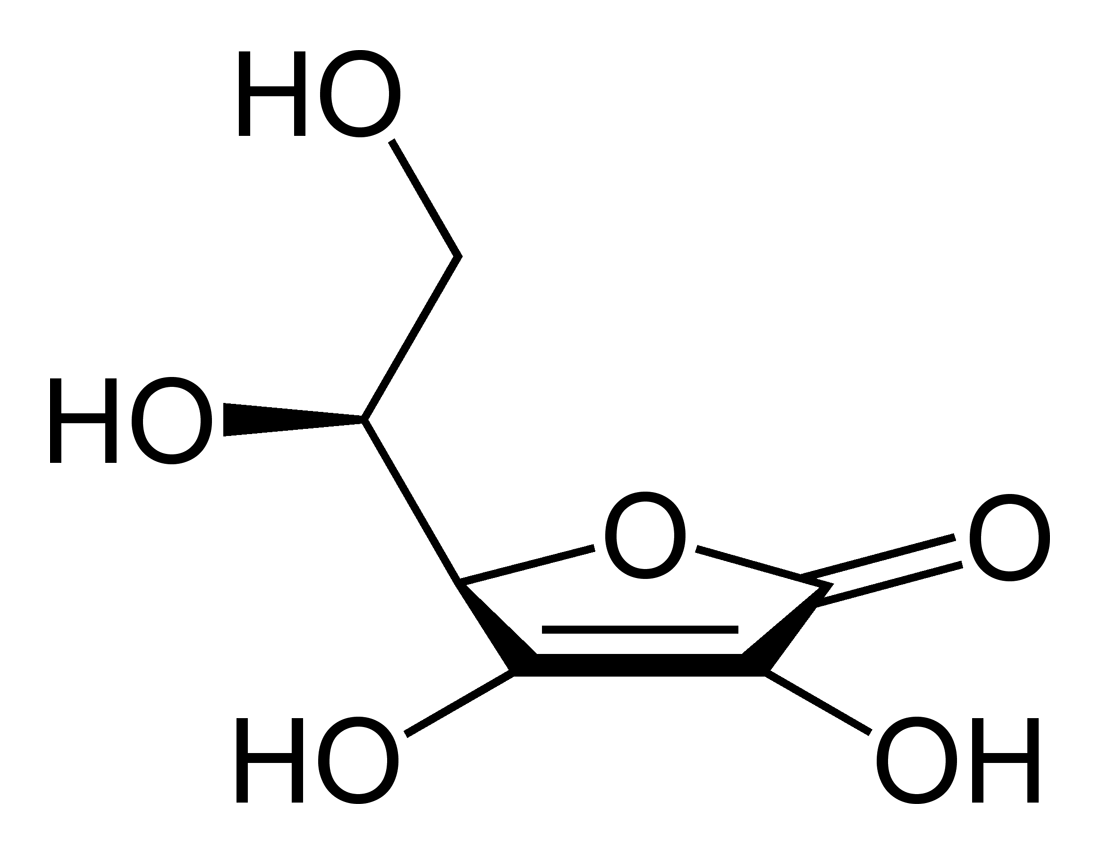
| Property | L-Ascorbic Acid |
|---|---|
| Common name | Vitamin C |
| Chemical name | L-Ascorbic Acid |
| Molecular formula | C₆H₈O₆ |
| Molecular weight | 176.12 g/mol |
| CAS Registry Number | 50-81-7 |
| Physical form | White to very pale-yellow crystalline powder |
| Solubility | Water-soluble |
Vitamin C is required for collagen biosynthesis, which is important for connective tissue, skin, blood vessels, bone and wound healing.
Ascorbate participates in antioxidant defense and can regenerate other antioxidants, including vitamin E.
Vitamin C improves absorption of nonheme iron, particularly from plant-based dietary sources.
Vitamin C contributes to normal immune function and is concentrated in several immune-cell populations.
Vitamin C deficiency can cause scurvy, which involves connective tissue weakness, fatigue and capillary fragility.
Vitamin C is studied in relation to immune defense and susceptibility to respiratory infections.
Research has examined dietary and supplemental vitamin C in relation to cardiovascular risk markers and disease outcomes.
High-dose intravenous vitamin C continues to be investigated in oncology, particularly as an adjunctive research strategy.
Vitamin C is widely studied because of its reducing and antioxidant properties.
Vitamin C increases absorption of nonheme dietary iron and has been studied in nutritional and anemia-related contexts.
Vitamin C has one of the largest human evidence bases among nutritional compounds. However, the interpretation changes significantly depending on whether the research involves ordinary dietary intake, oral supplementation or intravenous administration.
| Research Area | Evidence | Interpretation |
|---|---|---|
| Deficiency / Scurvy | Strong clinical evidence | Vitamin C replacement is established for deficiency. |
| Common Cold | Extensive trials | Regular supplementation does not generally prevent colds in the general population, although some outcomes may differ in specific groups. |
| Cardiovascular disease | Mixed | Observational associations do not establish that supplementation prevents cardiovascular events. |
| Cancer | Active research | Oral supplementation has not consistently demonstrated cancer prevention benefits. IV high-dose vitamin C remains investigational. |
| Oxidative stress | Strong mechanistic evidence | Biochemical antioxidant activity does not automatically establish clinical benefit for every condition. |
| Route | Evidence / Use | Important Difference |
|---|---|---|
| Oral | Most common nutritional and supplementation route | Intestinal absorption is dose-dependent and becomes less efficient at higher doses. |
| Intravenous | Approved products exist for specific indications and research continues in other areas. | IV administration produces substantially different plasma concentrations from oral administration. |
| Topical | Dermatology and cosmetic research | Local formulation and skin penetration determine exposure. |
This is particularly important because pharmaceutical ascorbic acid injections can be supplied as sterile liquid products rather than dry powders.
For example, current FDA labeling for ASCOR identifies it as a preservative-free, sterile, non-pyrogenic ascorbic acid injection. It is supplied at 500 mg/mL and must be diluted before intravenous infusion.
Therefore, the correct research question is not simply: "How much BAC water should be added to vitamin C?"
Instead, researchers should first identify the exact formulation, dosage form, intended route and authoritative preparation instructions.
| Diluent / Vehicle | Evidence Status | Interpretation |
|---|---|---|
| Bacteriostatic Water | Not established universally | Do not assume BAC water is compatible with every ascorbic acid formulation. |
| Sterile Water for Injection | Documented for ASCOR | The current ASCOR label identifies Sterile Water for Injection as an example of a suitable infusion solution, with isotonicity adjustments as necessary. |
| 5% Dextrose Injection | Documented for ASCOR | Listed by the current product labeling as a suitable infusion solution. |
| 0.9% Sodium Chloride | Product/formulation dependent | Compatibility should be established from the exact formulation documentation rather than generalized across all vitamin C products. |
A diluent documented for an FDA-labeled vitamin C injection should not automatically be used as a recipe for an unrelated vitamin C powder. The formulation, concentration, excipients, pH, osmolality and container system may all be different.
ASCOR provides an important formulation-specific example. The current label describes a sterile, non-pyrogenic, preservative-free ascorbic acid injection at 500 mg/mL supplied in a Pharmacy Bulk Package.
The ASCOR labeling should be followed only for ASCOR and not used to create instructions for unrelated vitamin C powders or products.
The basic mathematical relationship for concentration is:
If a hypothetical solution contains 1,000 mg of ascorbic acid in a final volume of 10 mL:
This is a mathematical example only. It does not establish that 100 mg/mL is an appropriate concentration for injection or any other route.
Open Universal BAC Water CalculatorThe following examples demonstrate concentration arithmetic only.
| Ascorbic Acid Quantity | Final Volume | Mathematical Concentration |
|---|---|---|
| 500 mg | 5 mL | 100 mg/mL |
| 500 mg | 10 mL | 50 mg/mL |
| 1,000 mg | 10 mL | 100 mg/mL |
| 2,000 mg | 10 mL | 200 mg/mL |
| 5,000 mg | 10 mL | 500 mg/mL |
These numbers are concentration calculations only. They are not instructions to prepare injectable vitamin C.
Ascorbic acid is chemically susceptible to oxidation. Stability can be affected by oxygen, light, temperature, pH, concentration, metals and formulation conditions.
Light exposure can contribute to degradation of ascorbic acid preparations. Current ASCOR labeling specifically instructs users to minimize light exposure during preparation and administration.
Ascorbic acid can undergo oxidation to dehydroascorbic acid and other degradation products.
Storage conditions should follow the validated requirements for the specific formulation rather than a generic vitamin C storage rule.
Certain metal ions can participate in oxidation chemistry. Product labeling should be followed regarding compatibility with elemental compounds.
The stability of a prepared solution can differ substantially from the stability of the original dry material. Post-preparation stability should be supported by formulation-specific data.
Sterile injectable vitamin C requires appropriate sterile manufacturing or compounding controls. Chemical purity alone does not establish sterility.
Endotoxin is a separate quality attribute from chemical assay. Injectable materials require appropriate bacterial-endotoxin controls.
Identity, assay, sterility, endotoxin, particulate matter, pH, osmolality and formulation quality are separate considerations.
Confirm that the material is L-ascorbic acid and distinguish it from salts such as sodium ascorbate.
Review quantitative assay results and the analytical method used.
Evaluate relevant degradation products, residual contaminants and other impurity information.
Food, supplement, research and pharmaceutical-grade materials should not automatically be treated as interchangeable.
Parenteral applications require appropriate endotoxin controls.
Maintain manufacturer, lot number, certificate of analysis and source information.
Vitamin C has established nutritional and pharmaceutical uses, but regulatory status depends on the specific formulation and intended use.
In the United States, ASCOR is an FDA-labeled prescription ascorbic acid injection indicated for short-term treatment of scurvy when oral administration is not possible, insufficient or contraindicated.
This regulatory status applies to the approved product and does not mean that every vitamin C powder or injectable formulation has the same regulatory status.
Dietary supplement vitamin C, laboratory-grade ascorbic acid and an FDA-labeled sterile injection are different product categories.
NIH's Office of Dietary Supplements describes vitamin C as having relatively low toxicity, but high oral intakes can cause gastrointestinal effects such as diarrhea, nausea and abdominal cramping.
| Characteristic | Oral | Intravenous |
|---|---|---|
| Absorption | Regulated by intestinal transport | Bypasses intestinal absorption |
| Plasma concentration | Tightly controlled at ordinary doses | Can reach substantially higher concentrations |
| Common use | Nutritional supplementation | Specific pharmaceutical indications and research |
| Formulation requirements | Product dependent | Sterility, endotoxin, osmolality and compatibility are critical |
High-dose intravenous vitamin C has been investigated in oncology and other research settings because IV administration can achieve plasma concentrations that cannot be achieved through ordinary oral dosing.
However, pharmacokinetic differences should not be interpreted as proof of clinical efficacy. Results vary according to cancer type, study design, combination treatment and patient population.
Evidence that intravenous vitamin C can produce higher plasma concentrations does not by itself establish that high-dose IV vitamin C improves survival or treats cancer.
Vitamin C is the common name for L-ascorbic acid, a water-soluble vitamin involved in collagen synthesis, antioxidant defense, immune function and iron absorption.
L-ascorbic acid has a molecular weight of approximately 176.12 g/mol.
Not inherently. Many vitamin C products are already formulated as finished dosage forms. Some injectable formulations are supplied as sterile solutions that require dilution before administration.
Bacteriostatic water should not be assumed to be a universal vitamin C diluent. The exact formulation documentation should determine the appropriate vehicle.
Current ASCOR labeling identifies suitable infusion solutions including 5% Dextrose Injection and Sterile Water for Injection. The final infusion must meet specified concentration and isotonicity requirements.
No. ASCOR is supplied as a sterile liquid ascorbic acid injection. It is diluted before intravenous infusion.
For mathematical purposes, concentration in mg/mL equals the total amount of ascorbic acid in milligrams divided by the final solution volume in milliliters.
No. The calculator performs mathematical concentration and volume conversions. It does not establish chemical compatibility, sterility, endotoxin safety, stability, osmolality or clinical suitability.
Stability depends on formulation and environmental conditions. Ascorbic acid can undergo oxidation, and light, oxygen, temperature, pH and other factors can influence stability.
No. Oral and intravenous administration produce different pharmacokinetic profiles and should be evaluated separately.
High-dose IV vitamin C remains an area of clinical research. Higher plasma concentrations can be achieved intravenously, but this does not by itself establish clinical efficacy for cancer treatment.
Use the BacScience Universal BAC Water Calculator for mathematical concentration and volume conversions. Always verify formulation-specific diluent, stability, sterility and route requirements independently.
Open BAC Water CalculatorSeptember 11, 2026
This page should be periodically reviewed as clinical research, pharmaceutical labeling, regulatory communications and formulation standards change.